For other languages, please use the translation option in your browser. |
|
|
 |
|
|
|
|
|
|
For all latest news, follow us on social media. |
|
|
|
|
|
|
ITC Market Analysis Tools, your free gateway to understanding international trade and market access features. Find the latest trade measures in the context of ongoing geopolitical tensions around the globe and the expiry of the African Growth and Opportunity Act (AGOA) in September 2025 — a turning point in sub-Saharan Africa–US trade relations.
If you need additional customized analysis or information on the latest effectively applied tariff rates, market dependence, or exposure rates for your products, please contact us at marketanalysis@intracen.org for more details on our offers. |
|
|
|
|
|
|
|
|
The end of AGOA could reduce African exports by $189 million |
|
|
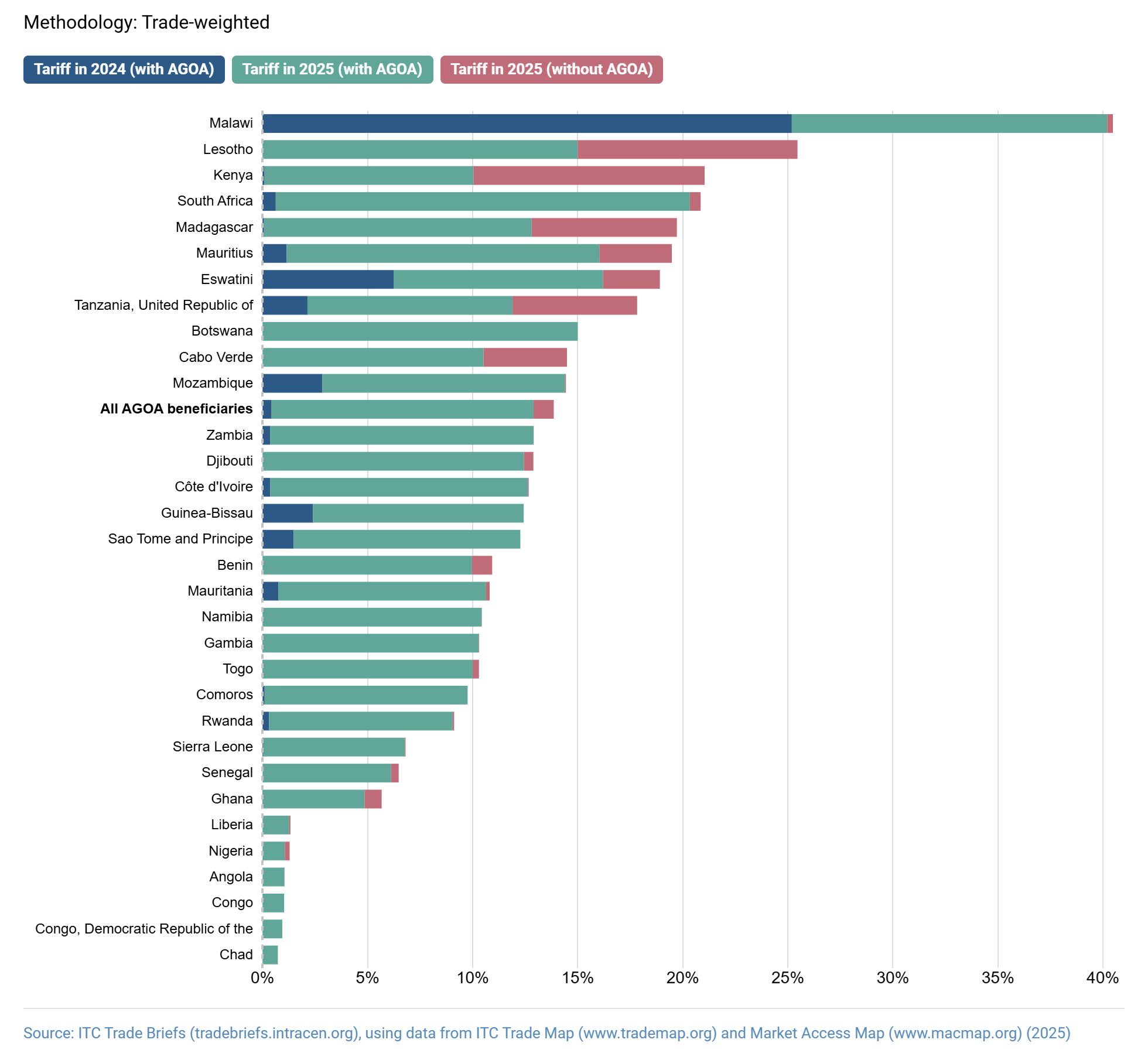
The past months have been marked by exceptional volatility in trade policy, with rapid changes to tariff regimes altering market access conditions across sectors and regions. At TMI, we have been strengthening our monitoring systems to capture these developments in a timely manner, ensuring that their implications for exporters can be assessed promptly. A case in point is the expiry of the United States’ African Growth and Opportunity Act (AGOA) on 30 September 2025. Since its launch in 2000, AGOA has granted duty-free access to thousands of products, supporting diversification in sectors such as apparel, vehicles, and processed food. In 2024, 32 countries benefited from the scheme, with 22 enjoying enhanced preferential margins for apparel products. The scheme’s end coincides with a period when tariffs on African exports have already risen sharply. Trade-weighted average duties faced by AGOA beneficiaries increased from just 0.4% in 2024 to 12.9% in 2025. Without AGOA, they will climb further to 13.9%, erasing preference margins that have shaped trade flows for a generation. |
|
|
Average tariffs faced by AGOA beneficiaries in the US market |
 |
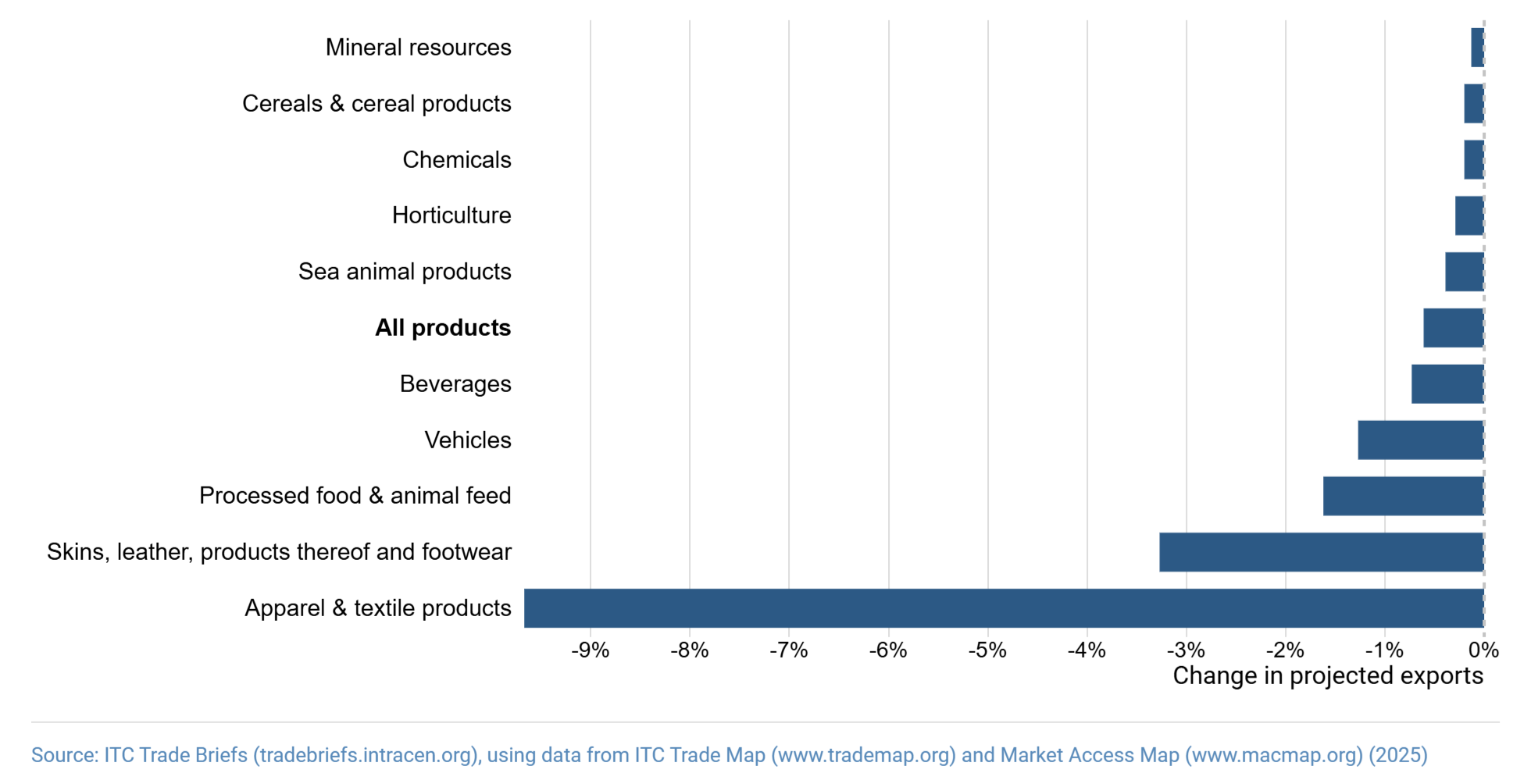
While the overall reduction in exports to the US market following AGOA’s lapse is projected at 0.6% ($189 million) by 2029, the aggregate conceals sharp differences across countries and sectors. Cabo Verde (-29%), Lesotho (-8.2%) and Kenya (-6.9%) record the largest declines. At the sector level, AGOA beneficiaries are expected to lose 9.7% – or $138 million – in apparel and textiles alone.
|
Impact of AGOA expiry on projected exports |
 |
Opportunities to cushion these losses exist. The untapped export potential in Africa is estimated at $16 billion by 2029 in products affected by recent tariff developments and the expiry of AGOA. Realizing this potential will depend on reducing trade frictions and strengthening supply capacity. These shifts underscore both the importance of preferences in shaping competitiveness and the need for continuous monitoring in a volatile trade environment. ITC’s September Trade Brief Spotlight and the forthcoming publication Beyond AGOA: Navigating Africa’s trade position amid a shifting global landscape provide an early, data-driven view of the changes underway and opportunities for diversification beyond the US market. |
| Read the Spotlight in our latest Trade Briefs |
|
|
MARKET ACCESS MAP Monitoring extraordinary policy measures & updates |
|
|
|
|
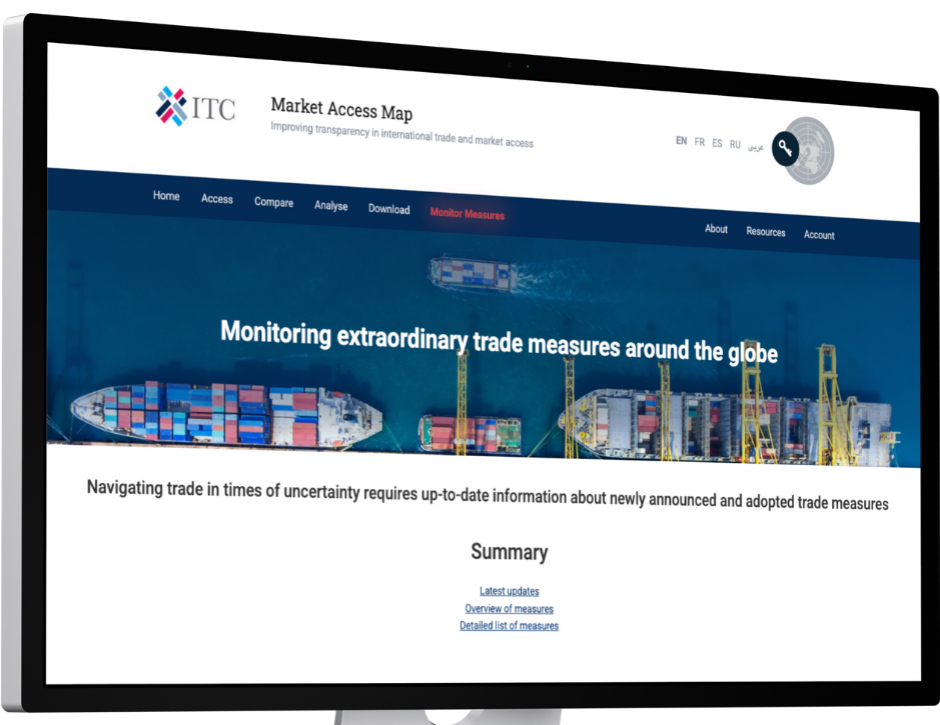
Through the Market Access Map tool, the Monitor Measures module closely monitors recent extraordinary trade measures introduced by major economies such as the United States, the European Union, and China, among others. These developments are analyzed and mapped to ensure MAT tools’ users remain informed about the latest tariff changes.
The Latest Updates – Geopolitical Tensions section further highlights key announcements and extraordinary measures adopted by countries, providing timely insights into the evolving global trade landscape. In the context of recent trade tensions, more than 200 trade measures have been collected, mapped and analysed. These include the latest US measures beyond tariffs, including anti-dumping investigations, export controls, covering products like critical minerals and solar cells, as well as various policy actions by other economies.
|
|
|
|
|
GLOBAL TRADE HELPDESK Expanding reach and empowering entrepreneurs |
|
|
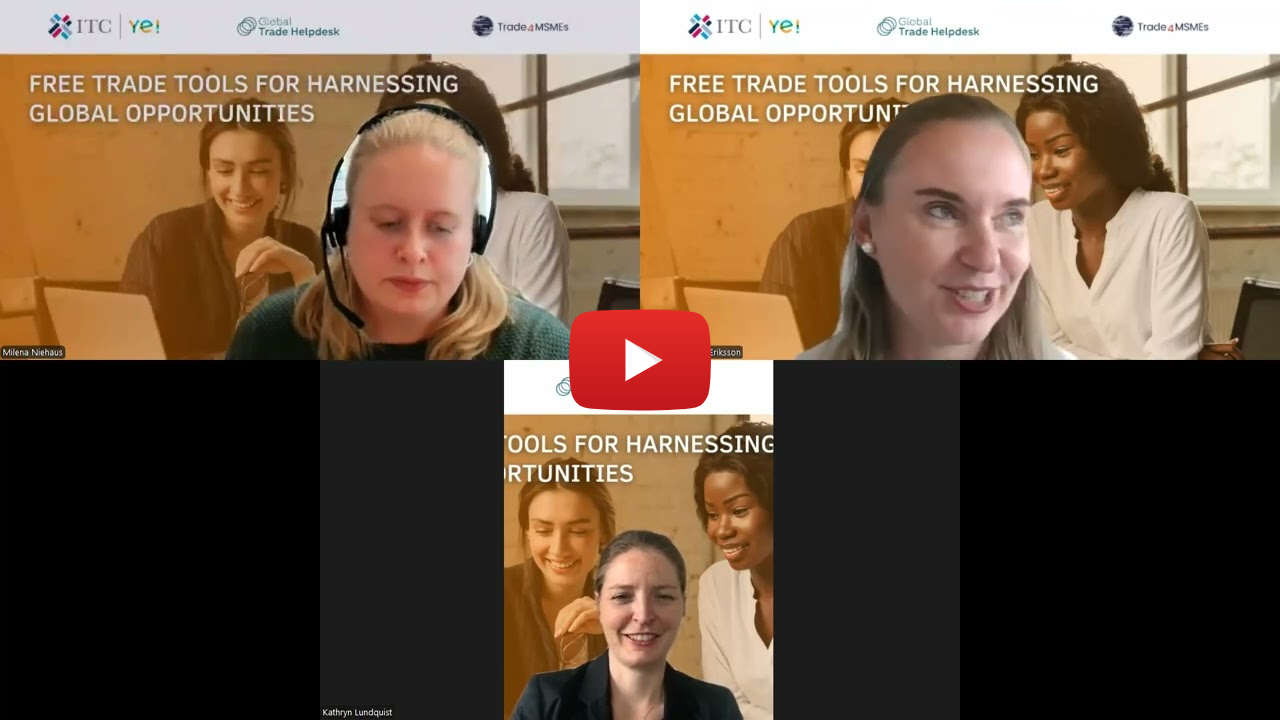
As global trade policies continue to evolve, the Global Trade Helpdesk (GTH) is working closely with partners and business support organizations (BSOs) to ensure firms can effectively identify and compare new market opportunities. |
|
|
|
|
|
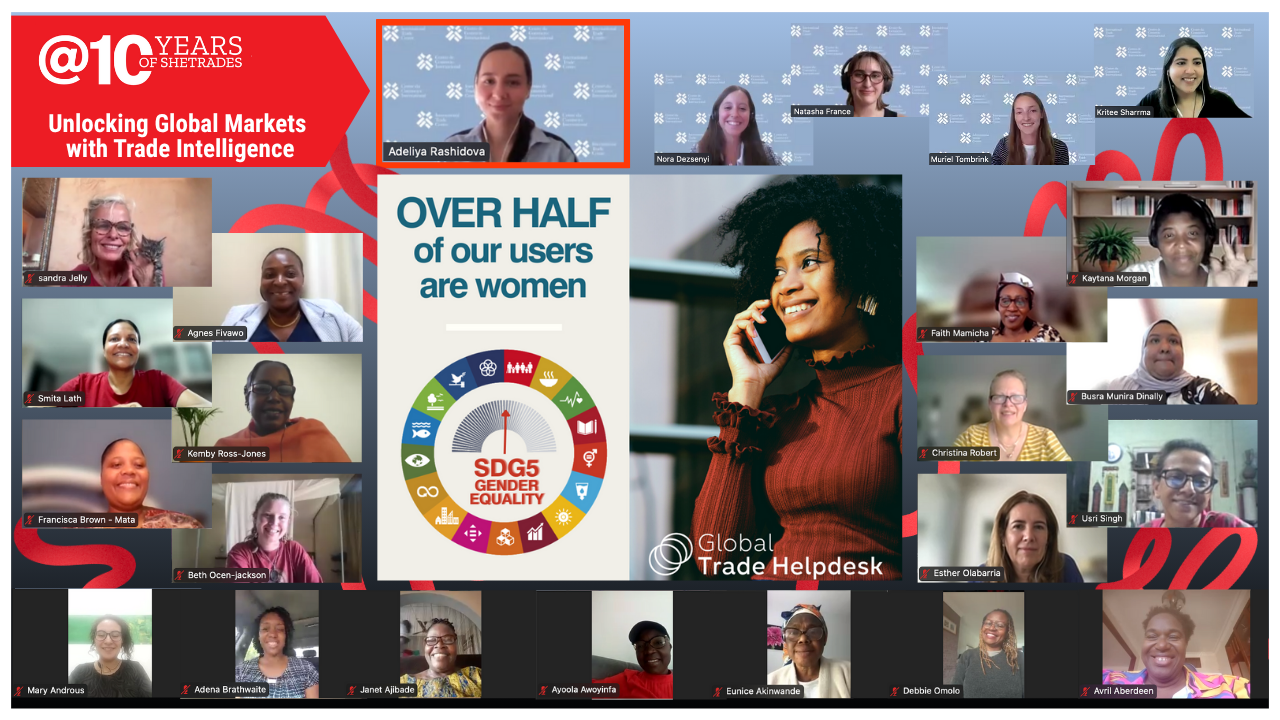
GTH was also spotlighted during the SheTrades 10th Anniversary Masterclass on 16 September, where it was highlighted as a key resource for women entrepreneurs by the President of the Organization of Women in International Trade (OWIT). Building on this recognition, GTH remains committed to supporting women-led businesses worldwide as they grow into international markets. In partnership with WIPO and ALADI, GTH further engaged firms and BSOs in Uruguay during a 15 September session. The discussion emphasized how to identify promising target markets and secure competitive advantages through effective IP protection strategies. |
|
|
The first Digital Training of Trainers on the GTH concluded in August, certifying 40 new trainers across China—including professionals from universities, chambers, and trade organizations. Organized with the China Council for the Promotion of International Trade (CCPIT) and the China Electronics Chamber of Commerce (CECC), this initiative strengthens local capacities and raises awareness of the Chinese-language version of GTH, launched last fall. |
|
|
| Go to the Global Trade Helpdesk |
|
|
|
AFRICAN TRADE OBSERVATORY Strengthening trade policy analysis in Africa |
|
|
|
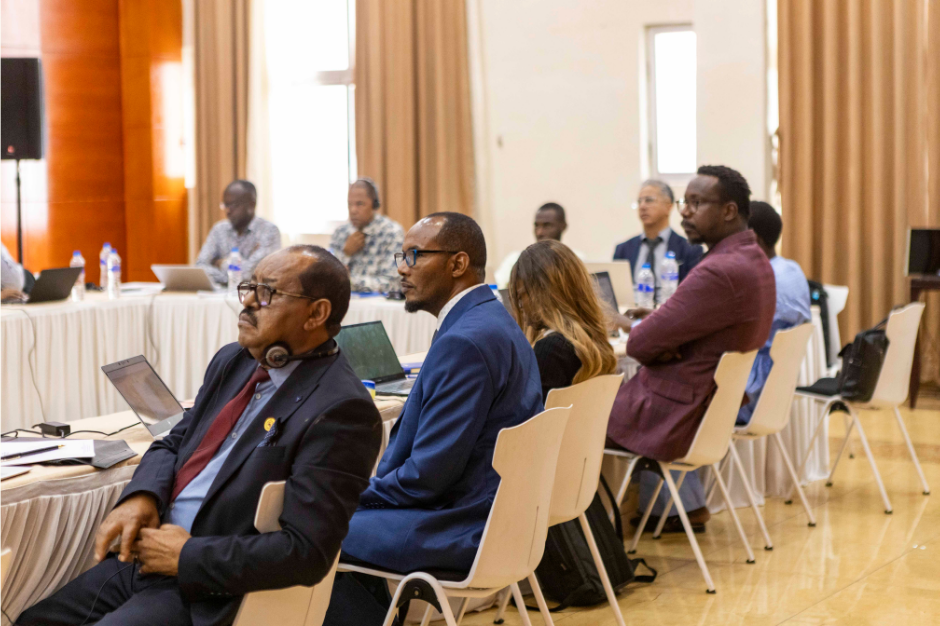
From 23 to 26 September 2025, 14 participants representing seven Regional Economic Communities (RECs) and the African Union Commission (AUC) gathered in Addis Ababa for the first-ever training on policy simulation using the African Trade Observatory (ATO). This workshop marks the final session in a three-part capacity-building programme, following previous trainings on market analysis (February 2024) and policy analysis (May 2025). |
|
|
|
The training introduced participants to the newly released ATO Policy Simulator, equipping them with tools to assess the potential impact of AfCFTA on specific sectors and products. Through a mix of theory, hands-on exercises, and group work, participants explored partial equilibrium methodologies and presented case-based simulations using the ATO platform. Complementing these efforts, a new self-paced e-learning course on market analysis was launched on 9 September 2025 at the margins of the Intra-African Trade Fair. Tailored for entrepreneurs and business professionals, the course enables users to explore market trends, identify export opportunities, and navigate market entry requirements using the ATO platform. |
|
|
|
|
|
Together, these initiatives reinforce the ATO’s role as a strategic instrument for evidence-based policy and business decisions, while expanding its reach to empower both public and private sector stakeholders across Africa. |
|
|
| Discover the African Trade Observatory |
|
|
EXPORT POTENTIAL ASSESSMENT New export potential publications for Tunisia and the Lao People's Democratic Republic |
|
|
|
The newly redesigned Export Potential Map allows users to filter publications by language. Although most publications are available only in English, some are also available in French and Spanish. |
|
|
|
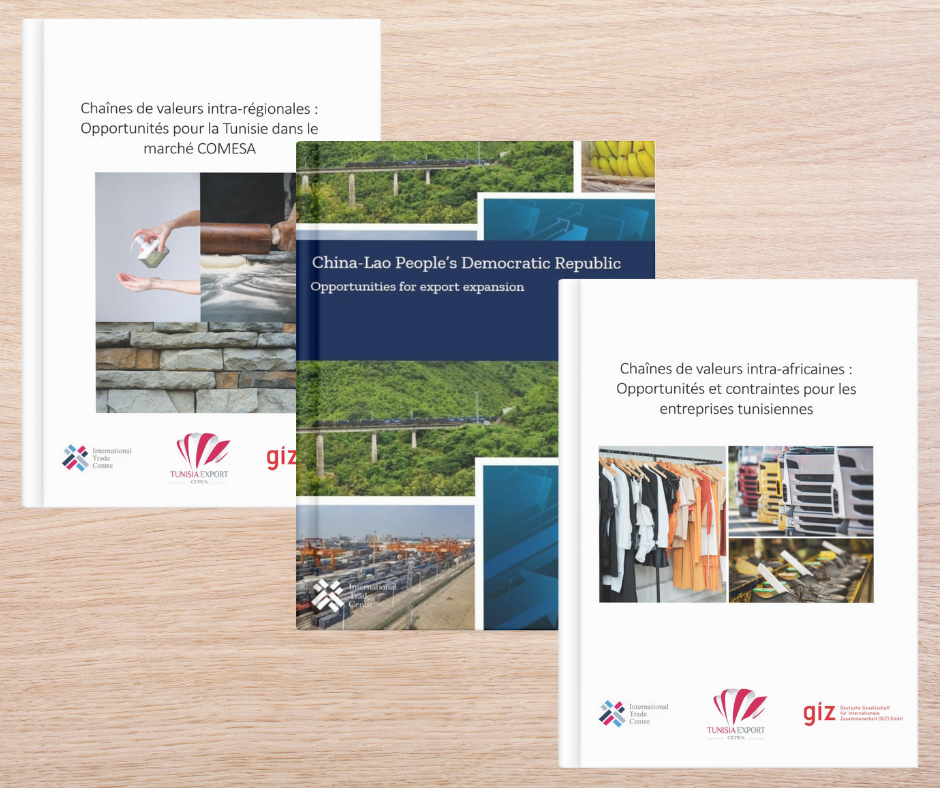
Two new reports—available in French and English—focus on intra-regional value chain opportunities for Tunisia. One report identifies over $300 million in trade growth potential for Tunisia in COMESA and highlights opportunities to collaborate on 26 regional value chains (read in French / English). The other report identifies potential for Tunisia to integrate into intra-African value chains in automobiles and trucks, cosmetics, leather footwear and leather products, fishery products, and cotton clothing (read in French / English)
Another new report—available in English—illustrates how the Lao People’s Democratic Republic can unlock $904 million in export potential to China while diversifying exports and integrating into regional value chains. |
|
|
| Visit Export Potential Map |
|
|
TRADE MAP
2024 and 2025 trade data updates |
|
|
|
|
|
|
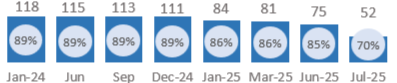
Global merchandise trade data July 2025 data is now available for 52 countries, covering 70% of global merchandise trade. |
|
|
 |
|
|
Trade Map is updated weekly to include the latest figures reported by national authorities. With data now available for 75 countries for the second quarter of 2025, Trade Map remains one of the most comprehensive and up-to-date global trade databases. |
|
|
 |
|
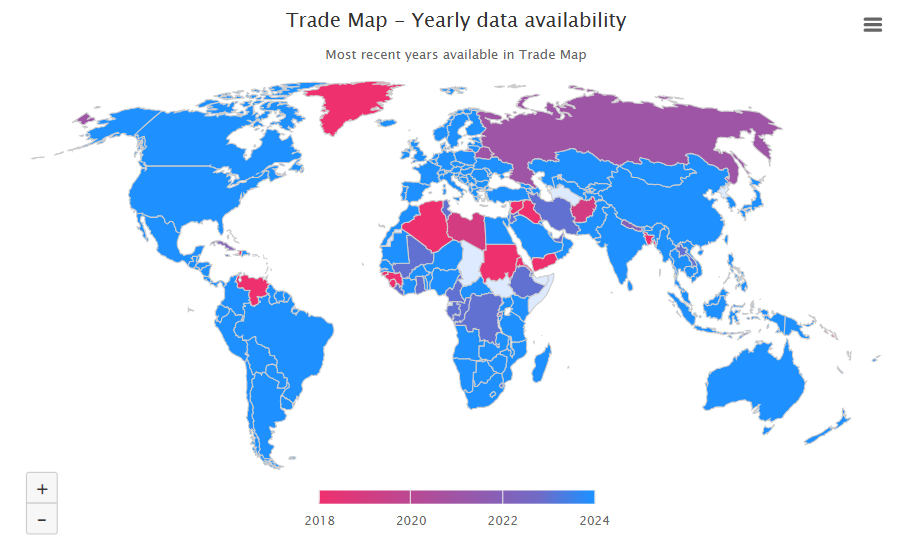
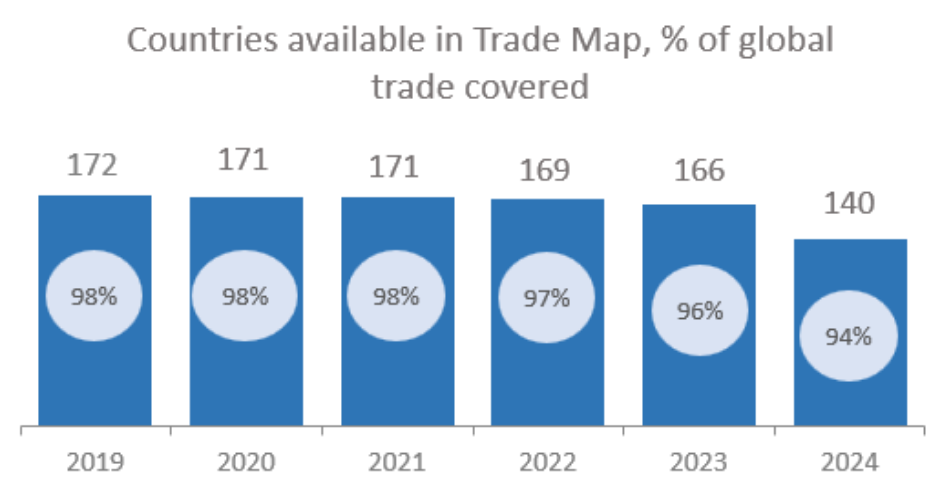
Global trade indicators The 2024 global trade indicators were updated on 29 September 2025. Trade Map now features data from 140 countries, including 13 newly added this quarter, covering more than 94% of world merchandise trade for 2024. |
|
|
 |
|
|
Trade in services data Since August 2025, yearly 2024 data have been available for 187 countries. More updates to come throughout the 4th quarter of 2025. |
|
|
|
|
CAPACITY BUILDING
First Training of Trainers in market intelligence in the Americas A milestone achieved in Ecuador |
|
|
|
|
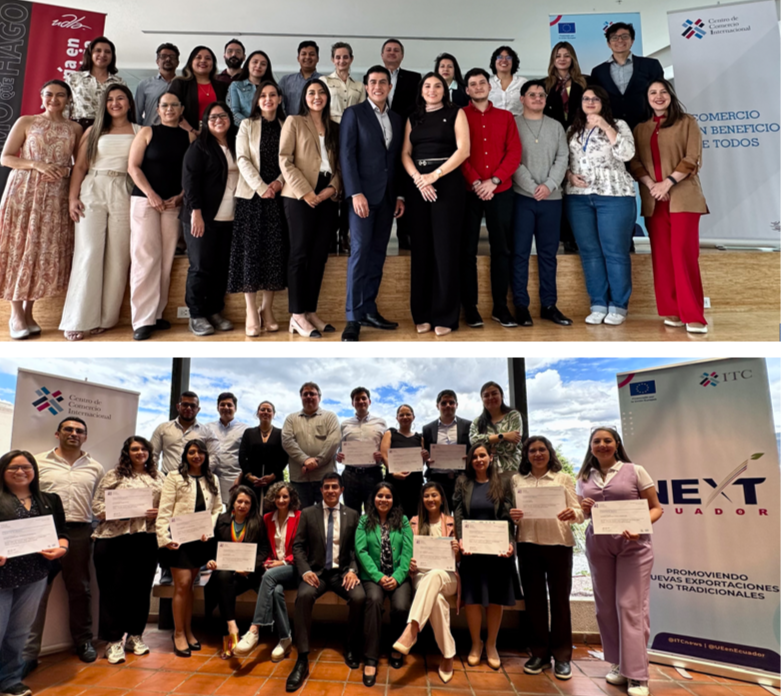
Quito was the stage for a significant regional achievement: the first Training of Trainers in market intelligence held in the Americas, under the framework of the NEXT Ecuador project, financed by the European Union. Between 15 and 19 September 2025, the second phase of this programme took place, with participants representing public, private, and academic institutions engaged in Ecuador’s trade community. |
|
|
This second phase followed a first one conducted in July 2025, which introduced participants to elementary and intermediate use of ITC’s Trade Map and Market Access Map. Building on that foundation, the Quito phase focused on methodological and pedagogical aspects: how to design and deliver effective training sessions and apply adult learning communication techniques. Additionally, participants were familiarized with other ITC tools and with experiences from various regions of the world. This was aimed at broadening their perspective on how trade and market intelligence can be applied in various contexts, and at positioning them as potential stakeholders and early users of new information solutions that ITC may bring to Latin America in the future.
The main objective was to enable a group of professionals to qualify as trainers on Trade Map and Market Access Map. Since these trainers are already part of institutions working on export promotion and export development in Ecuador, they are expected to apply this knowledge directly in their professional activities and potentially collaborate with ITC in further initiatives. |
|
|
This approach is consistent with ITC’s business model of empowering local talent and strengthening local capacities to ensure sustainability. The activity concluded with the certification of 18 trainers in Trade Map and Market Access Map, who now form part of a pioneering network in the region. Their role will be to support wider access to trade intelligence services in Ecuador and, over time, in other countries across the Americas. |
|
|
Certified trainers: Creating impact locally |
|
|
TANZANIA May 15-16, 2025 - Three certified trainers, Mr. Godlove F. Miraji (The University of Dodoma - UDOM), Dr. Petro Sauti Magai (University of Dar es Salaam - UDSM), and Ms. Miriam C. Kikoti (Tanzania Trade Development Authority - TANTRADE), facilitated the workshop on the ITC Trade Map and Market Access Map. The training brought together 16 participants from government institutions and the private sector engaged in the honey value chain, aiming to strengthen their capacity to effectively utilize ITC’s flagship tools. Participants commended the sector-specific approach, noting that it fostered a collaborative learning environment where they could share diverse experiences and gain a deeper understanding of opportunities within the value chain. |
|
|
This workshop was part of the Beekeeping Value Chain Support (BEVAC) Project – Tanzania, an initiative funded by the European Union and implemented by the International Trade Centre (ITC) in partnership with Enabel. |
|
|
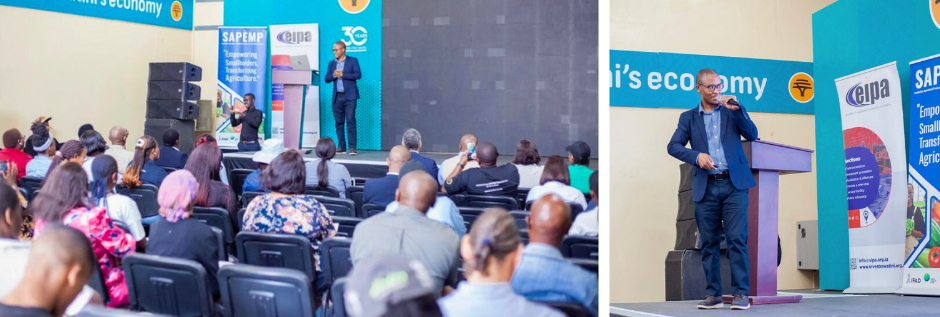
ESWATIN September 3, 2025 – Certified ITC trainer Clement Magagula contributed to the “How to Start Exporting” seminar, hosted by the Eswatini Investment Promotion Authority (EIPA). The seminar aimed to equip Eswatini MSMEs with the knowledge required to navigate the export process. Participants were introduced to a “10-Step Export Guide”—a structured approach to preparing for export. |
|
|
Around 70 MSMEs attended, of which approximately 96% represented the private sector and 4% the public sector. Attendees came from diverse industries, including retail, manufacturing, tourism, and agriculture. Clement led the session on Step 2: “How to Conduct Market Research.” During this segment, participants learned practical techniques such as analysing trade flows to assess market size, identifying dynamic export destinations, and evaluating market access conditions using ITC’s Market Analysis Tools. The seminar is expected to inspire Eswatini’s MSMEs to leverage trade intelligence more effectively, enabling them to expand their reach—moving from local markets toward international export opportunities. This was a result of the Eswatini: Promoting Growth through Competitive Alliances project funded by the European Union (EU). |
|
|
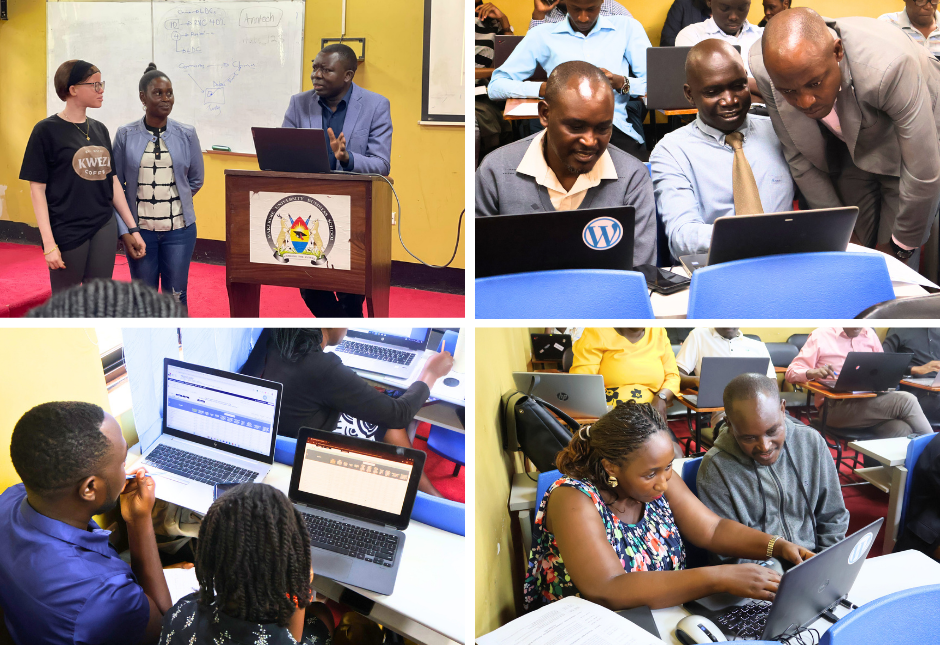
UGANDA September 2025 - ITC-certified trainers Dr. Aaron Ecel, Ms. Ahebwa Doreen, and Mr. Humphrey Ngobi took a major step forward in advancing the use of ITC Market Analysis Tools in Uganda. Through a powerful mix of university outreach and SME engagement, they equipped 184 undergraduates and 17 Master of International Business (MIB) students at Kyambogo University, 43 participants in a 5-day training at Makerere University Business School (MUBS), 18 Master of Business Administration (MBA) students, and 86 Learning Management System (LMS) learners with cutting-edge trade intelligence skills. Their work is creating a true multiplier effect - bridging academia, SMEs, and policymakers, and building a new generation of data-driven decision-makers. The momentum continues, with further stakeholder engagement planned in Mbarara in October 2025. |
|
|
Around 70 MSMEs attended, of which approximately 96% represented the private sector and 4% the public sector. Attendees came from This was an activity under the EU-EAC Market Access Upgrade Programme (MARKUP II) funded by the European Union (EU). |
|
|
SME Trade Academy Online self-paced learning |
|
|
Trade professionals worldwide have the opportunity to enhance their skills in analysing international markets following the self-paced online course "How to Analyse Trade Flows" and "How to Access International Markets" on the SME Trade Academy platform.
These courses provide comprehensive introductions to ITC’s flagship market analysis tools Trade Map and Market Access Map. The tools simplify complex trade data and foster data-driven decision-making, helping enterprises navigate international markets effectively.
320 participants from 45 countries joined the 3rd 2025 edition of the course on market access and 402 participants from 42 countries joined the one on trade flows, around 40% of whom were women. Building on their success, we are thrilled to announce another round of these courses starting in November this year. Stay tuned for updates and join us to elevate your trade expertise. |
|
|
|
|
|
|
|
|
DONORS
Funders to the ITC Trade Map, Market Access Map, Export Potential Map and Trade Briefs: |
|
|
|
|
|
|
|
|
© 2025 All Rights Reserved |
|
|
|
|