For other languages, please use the translation option in your browser. |
|
|
 |
|
|
|
|
April - June 2026 ITC Trade and Market Intelligence NEWSLETTER DRIVING TRADE WITH DATA-POWERED INTELLIGENCE |
|
|
For all latest news, follow us on social media. |
|
|
|
|
|
|
|
|
|
|
|
|
 |
|
|
New Rules of Origin self-assessment tool to join the African Trade Observatory |
|
|
|
|
A new tool to automatically assess the origin of African products under the legal terms of the African Continental Free Trade Area (AfCFTA) and other major African trade agreements will be rolled out as part of the African Trade Observatory, thanks to the financial support of the European Union. The tool will help small businesses better navigate and self-assess their products against the complex web of rules of origin, ultimately promoting value addition and enabling duty-free trade across the continent. The tool will include an interactive questionnaire to help users verify compliance with the core origin criteria, as well as the specific provisions and transport requirements under the AfCFTA and other major regional trade agreements in Africa. An innovative feature will allow users to enter information on the materials used and production processes, and will perform a live automated assessment, providing a preliminary indication of whether a product is likely to qualify under the applicable rule of origin in one or several available trade agreements simultaneously. |
|
|
The tool has the potential to greatly facilitate understanding and adoption of rules of origin by a wider African business community, and ultimately contribute to fostering trust between traders and customs authorities — an important prerequisite for successful operationalization of the AfCFTA. Its development was made possible thanks to the financial support of the European Union. |
|
|
Stay tuned for ITC updates to be the first to test the Beta version of the tool! |
|
|
 |
|
|
The ATO advances regional engagement and continues to expand data coverage |
|
|
|
|
During the second quarter of 2026, the African Trade Observatory (ATO), implemented thanks to the financial support of the European Union, continued to deepen its engagement with Customs Authorities, Ministries of Trade and regional partners across the continent, while making measurable progress in expanding the coverage and quality of trade data available on the platform.
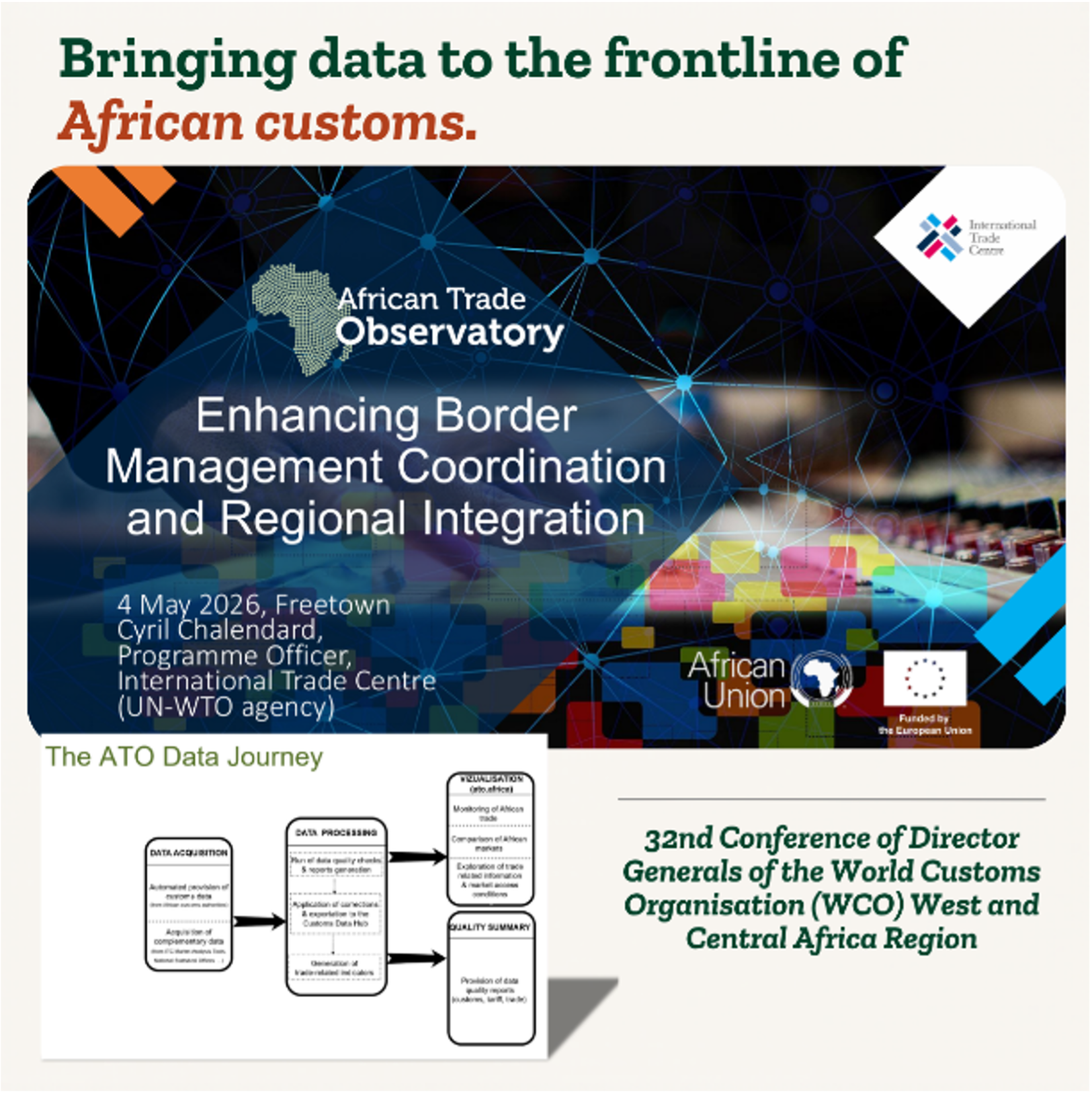
A highlight of the quarter was the ATO’s participation in the 32nd Conference of Directors General of Customs from the West and Central Africa (WCO-WCA) Region, held from 4 to 8 May 2026 in Sierra Leone. Discussions focused on strategic priorities in customs administration, trade facilitation, border security, and regional cooperation. The ATO’s presence provided an important opportunity to strengthen relationships with customs administrations in the region and demonstrate how the platform supports data-driven decision-making and continental trade reporting under the African Continental Free Trade Area (AfCFTA). |
|
|
|
|
Significant progress was also made in expanding the African Customs Data Hub. Several member states have now shared, on a manual or automated basis, transaction-level data up to 2025 or 2026. For instance, Cabo Verde, Comoros, Ethiopia, Equatorial Guinea, Guinea-Bissau, Liberia, Mauritius, Namibia, Nigeria, Sao Tome and Principe, and Zambia have provided data recently. This continuously growing coverage (35 countries as of today) enhances the platform’s ability to deliver timely and relevant trade intelligence to governments, businesses, and development partners across Africa. |
|
|
Growing momentum in trade in services statistics |
|
|
Activity also intensified in the trade in services area. In late April, ITC convened key national stakeholders in Windhoek, Namibia, for a technical workshop on strengthening travel services trade statistics — one of the country’s most important services sectors.
Through hands-on discussions and practical exercises, participants explored ways to improve data quality, refine methodologies, strengthen inter-agency cooperation, and integrate multiple data sources into a more comprehensive travel statistics model.
As the ATO moves into the second half of 2026, the momentum built through regional events, data partnerships, and country-level technical cooperation — sustained thanks to the financial support of the European Union — positions the initiative well to further scale its impact and strengthen Africa’s trade and investment intelligence ecosystem. |
|
|
|
|
 |
|
|
Monitoring the Strait of Hormuz crisis |
|
|
|
|
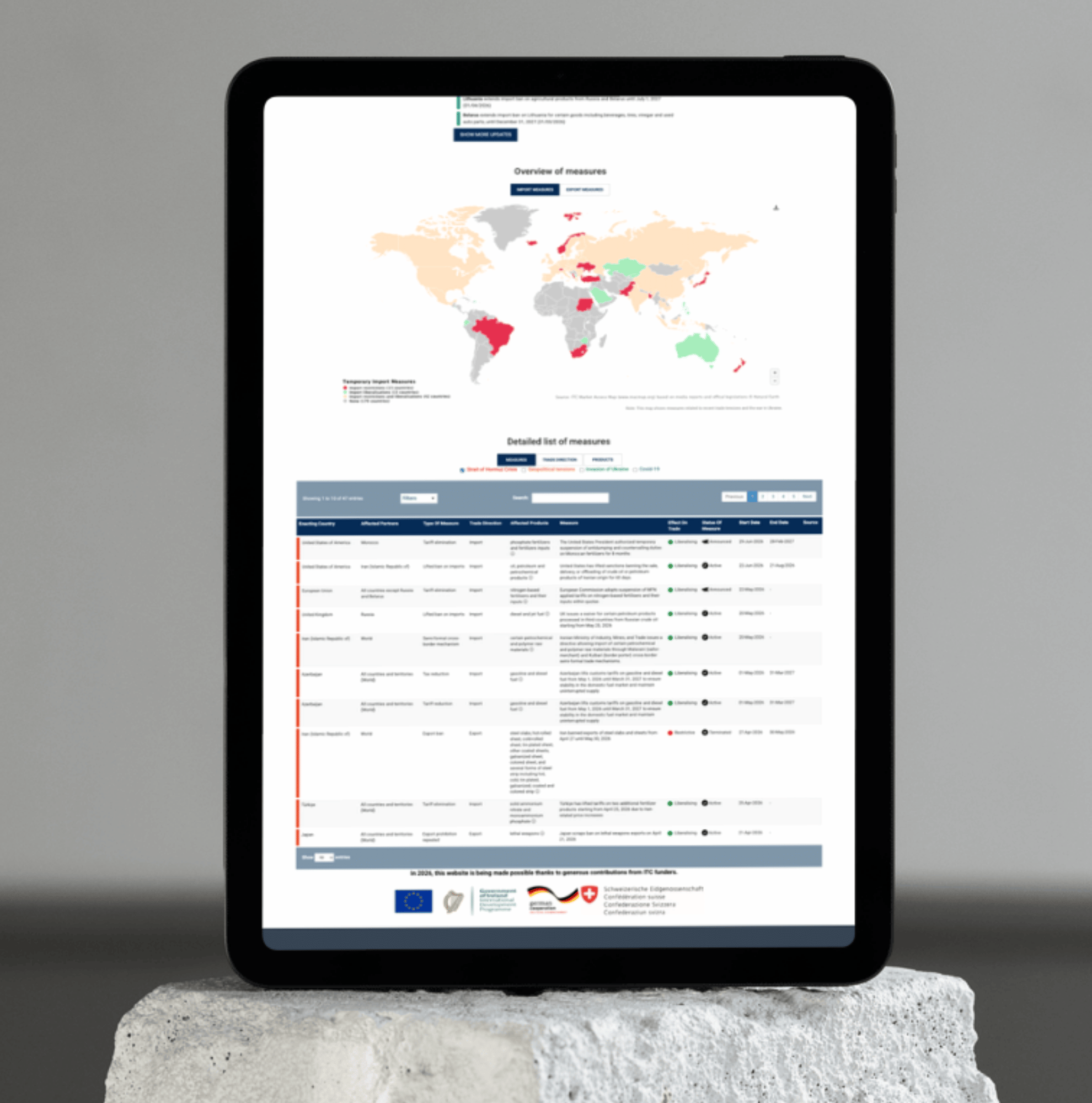
The Monitor Measures module of Market Access Map has expanded its services to cover the new trade measures adopted in relation with the conflict in the Strait of Hormuz. Since March, the new section has captured and tracked more than 40 export and import measures, primarily affecting trade in energy, fertilizers and food. The macroeconomic disruptions from the Hormuz Strait crisis led to a spike in broader trade measures linked to currency stabilization and pressure on consumer prices, leading to a number of import bans.
In parallel, the US has amended its extraordinary tariffs applied on imports and launched a number of new country-specific tariff investigations, which are expected to come to fruition during summer. In response to the ongoing invasion of Ukraine, a number of countries adopted new restrictive measures on trade with Russia and Belarus. At the same time, several countries relaxed their measures on Russian oil products to cope with short-term impacts from disruptions in the Strait of Hormuz.
The dashboard is updated daily, and tracks extraordinary trade measures related to geopolitical tensions and the invasion of Ukraine, in addition to the Hormuz Strait crisis. |
|
|
|
|
 |
|
|
Supporting simplified market research for SMEs across regions |
|
|
|
|
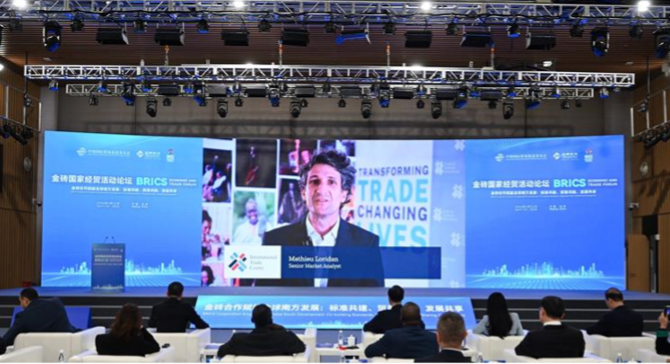
On 24 April, a keynote speech was delivered at the 2026 BRICS Economic and Trade Forum hosted by the China Council for the Promotion of International Trade (CCPIT), highlighting how the Global Trade Helpdesk (GTH) enables MSMEs to diversify markets, partners, and value chains by accessing trusted trade intelligence during a period of rapid expansion of South-South trade.
In parallel, the GTH team expanded its outreach through a series of webinars and capacity-building activities for business support organizations (BSOs), small businesses, and academic institutions. |
|
|
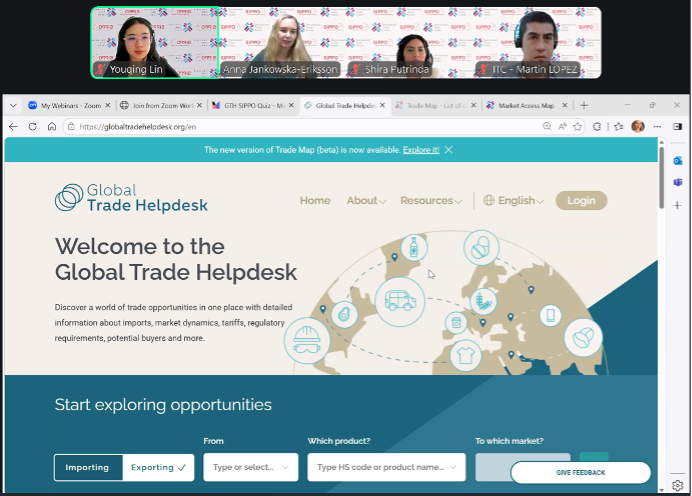
In May, the team partnered with the Swiss Import Promotion Programme (SIPPO) to deliver the Global Introductory Webinar Series on ITC Market Analysis Tools (MAT) for SIPPO BSO Partners. The sessions demonstrated practical applications of a comprehensive suite of MAT, including GTH, to identify opportunities and navigate evolving market conditions. The series engaged 79 unique BSOs from Bosnia and Herzegovina, Morocco, North Macedonia, Serbia, South Africa, Tunisia, and Viet Nam.
On 5 May, GTH collaborated with WTO Trade4MSMEs and the Pan African Alliance of Small & Medium Industries (PAOSMI) to deliver a webinar attended by more than 140 SME representatives from 24 economies, including Barbados, Cameroon, Nigeria, and so on. |
|
|
|
On 14 May, following a request from the Lao Ministry of Industry and Commerce (MOIC) and the Lao National Chamber of Commerce and Industry (LNCCI), GTH delivered a webinar for Lao companies, featuring practical examples of cassava, rubber, and electric energy.
In addition, as the officially recommended market intelligence tool by the CCPIT Commercial Sub-Council, GTH delivered a webinar for university professors and lecturers specializing on international trade, strengthening their teams' market analysis capacity for participation in China's National University Business Challenge. |
|
|
|
|
|
|
 |
|
|
Expanded access, conditional gains Exploring new opportunities in Africa–China trade |
|
|
|
|
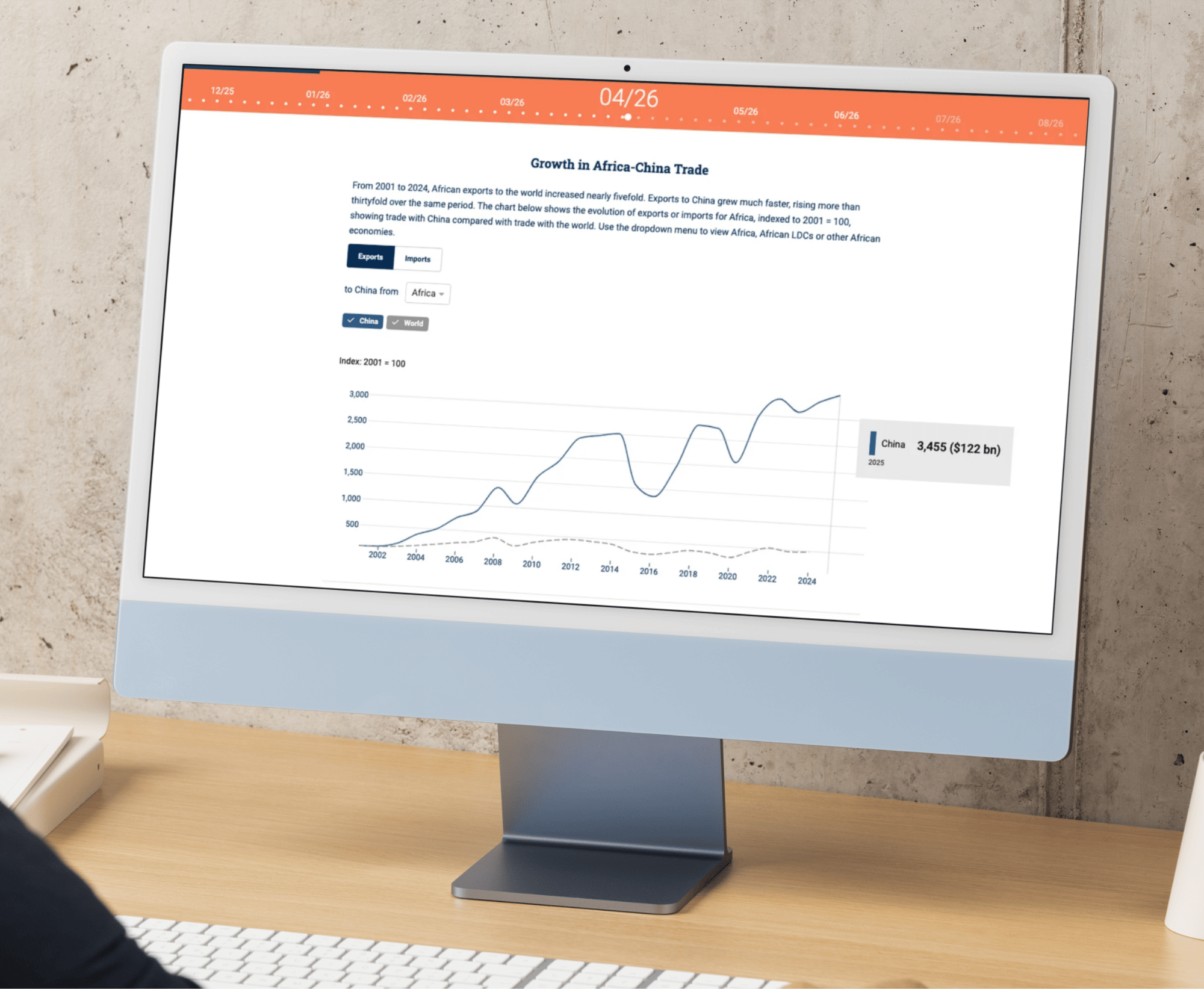
The April Trade Briefs Spotlight examines the implications of China’s expansion of duty-free access to exports from 53 African countries. As China remains Africa’s largest individual trading partner, the analysis explores how evolving market access conditions could affect export opportunities and support diversification towards more value-added products.
Drawing on ITC trade and market access data, the study finds that the expanded preferences could increase Africa’s export potential to China by approximately $16 billion by 2030 under a conservative scenario, and up to $20 billion if exporters are able to benefit from in-quota tariff rates. The largest projected gains are concentrated in mineral resources, vehicles, and wood, paper, rubber and plastics products, while additional opportunities emerge in agricultural sectors under more favourable quota assumptions. |
|
|
|
|
|
The analysis also highlights that realizing these gains will depend on more than tariff reductions alone. Preference utilization under China’s existing schemes has remained relatively low, underscoring the importance of rules of origin compliance, market intelligence, and supply-side capacity. The Brief therefore examines both the opportunities created by improved market access and the practical challenges exporters may face in translating preferences into trade. |
|
|
| Read the latest Trade Briefs Spotlight |
|
|
 |
|
|
Update Export Potential Map |
|
|
|
|
|
|
Export Potential Map received its spring update, incorporating the latest trade data, updated IMF GDP growth projections, and forward-looking tariff assumptions, including the recent EU–MERCOSUR agreement. The updated estimates point to a 0.9% increase in global export potential, while baseline exports remain broadly stable based on the 2020–2024 average. |
|
|
| Visit Export Potential Map |
|
|
 |
|
|
Certified trainers: Creating impact locally Certified trainer in the spotlight: meet Alfred Wasikye |
|
|
Alfred Wasikye’s journey shows how access to the right trade intelligence can turn data into informed decisions and measurable business growth. |
|
|
|
|
|
As the CEO of Chanzo Coffee, Alfred used ITC’s Market Analysis Tools to move from intuition to evidence-based decision-making — identifying promising export markets for his premium specialty coffee, understanding demand trends, and connecting with potential buyers. By applying data-driven insights to his business strategy, he achieved a 20–30% increase in revenue, demonstrating the real impact that reliable market information can create for businesses. Since his certification, Alfred has been multiplying this impact as an ITC Certified Trainer, sharing his expertise with his peers and the larger trade community in Uganda. |
|
|
|
|
His story reflects the spirit of the Certified Trainers Programme: building local expertise that lasts. Because when knowledge reaches the right people, it does not stay as information — it becomes opportunity. |
|
|
|
|
|
Strengthening the capacities of Peruvian officials in market access data |
|
|
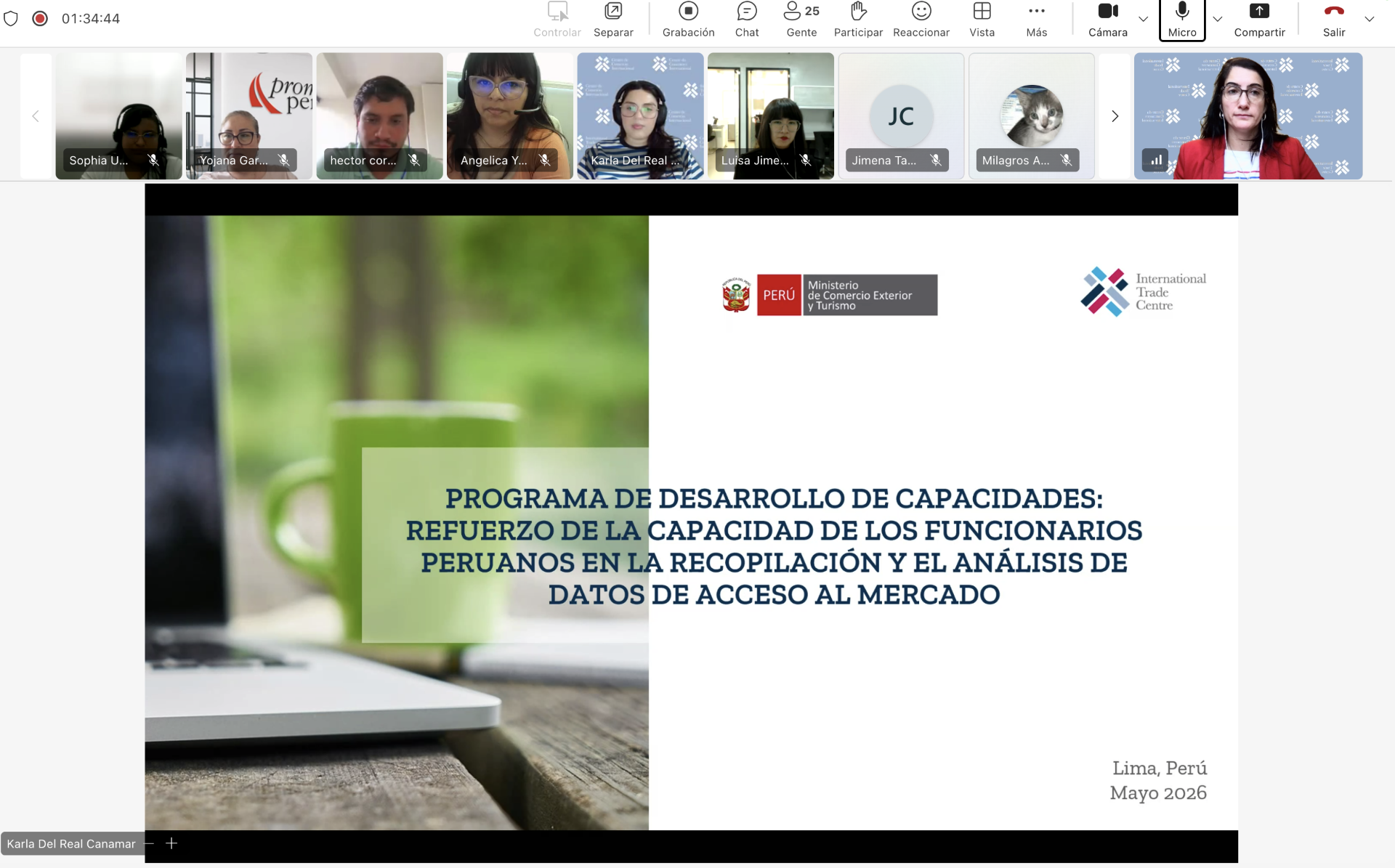
From 14 to 29 May 2026, the Capacity Building Programme: Strengthening the capacities of Peruvian officials in the collection and analysis of market access data was successfully conducted. In this context, 25 officials from Peru deepened their knowledge of market access conditions, with a particular focus on non-tariff measures, especially sanitary and phytosanitary (SPS) measures and technical barriers to trade (TBT). They also received training in the use of Market Access Map and the ITC data entry tool; in addition, they took part in practical exercises and contributed to the development of market access profiles.
This programme was made possible thanks to the Ministry of Foreign Trade and Tourism of Peru (MINCETUR), under the Interinstitutional Agreement “Peruvian Portal for Market Access and Trade Regulations” established between MINCETUR and ITC. |
|
|
|
|
|
|
Strengthening market analysis capacity in Serbia with the new generation of ITC tools |
|
|
Representatives from key Serbian institutions strengthened their market analysis and trade intelligence capabilities through a specialised workshop on key value chains and products in the agribusiness sector, bringing together participants from government entities and academia. The workshop focused on the Rules of Origin Facilitator, showing how rules of origin can help exporters understand whether their products qualify for preferential tariff treatment under Serbia’s trade agreements, including agreements with regional partners and major export markets. |
|
|
A key highlight of the workshop was the introduction and testing of several new and enhanced ITC digital tools. Participants were among the first professional users to explore the HS Product Code Search Engine, a product classification tool leveraging AI and ITC’s novel product database. The participants were shown a demonstration of the tool during the HS Fundamentals and Product Classification session.
The workshop also provided an opportunity to learn about the new features and to test in practice the revamped version of Trade Map. These two ITC tools help operationalize complex rules of origin under Serbia’s FTAs, which are often based on calculation of HS codes for produced goods and their ingredients, and on the sourcing options from a wide geography accessible through FTAs. |
|
|
|
|
|
|
|
|
Expert training on trade policy analysis in Eswatini |
|
|
From 24 to 27 March 2026, TMI delivered a four-day expert training workshop on trade policy analysis in Ezulwini, Eswatini, under the Eswatini: Promoting Growth through Competitive Alliances II project.
The training brought together 27 participants representing government ministries, trade and investment promotion institutions, business support organizations, and other partner institutions. The workshop aimed to strengthen participants’ capacity to analyse trade policy developments using quantitative indicators and modelling tools, with a focus on tariff reforms and regional integration scenarios.
Methodologies for trade policy analysis were studied, including partial equilibrium modelling and its applications. The programme also provided hands-on experience with the African Trade Observatory (ATO) AfCFTA Policy Outlook module. Participants examined recent trade policy developments, including examples related to the African Continental Free Trade Area (AfCFTA), and assessed the expected effects of tariff changes on selected regional economic communities and sectors, presenting their findings at the end of the training.
Participants highlighted the practical exercises and policy simulation tools as particularly valuable. Many noted that the training strengthened their ability to support evidence-based trade policymaking, identify market opportunities and better understand the implications of regional trade agreements.
The workshop is part of TMI’s continued efforts to strengthen analytical capacities among trade stakeholders in Eswatini and support informed decision-making for regional integration and export development. |
|
|
SME Trade Academy Online self-paced learning |
|
|
The latest quarter has been particularly active for e-learning on ITC market analysis tools, with strong engagement from trade professionals worldwide. In the most recent editions of one of our flagship courses, participation remained high. The May session of “How to Access International Markets” brought together 307 participants (122 women).
This course continues to play a key role in building practical skills for data-driven analysis of market access. This course offers participants a structured introduction to the world of tariffs, non-tariff measures and trade agreements, as well as hands-on guidance on the use of Market Access Map (MAcMap).
Looking ahead, the next edition of “How to Access International Markets” will begin on Monday 17 August, and registrations are now open on the SME Trade Academy. |
|
|
|
|
|
|
DONORS
Funders to the ITC Trade Map, Market Access Map, Export Potential Map and Trade Briefs: |
|
|
|
|
|
|
|
|
© 2025 All Rights Reserved |
|
|
|
|